


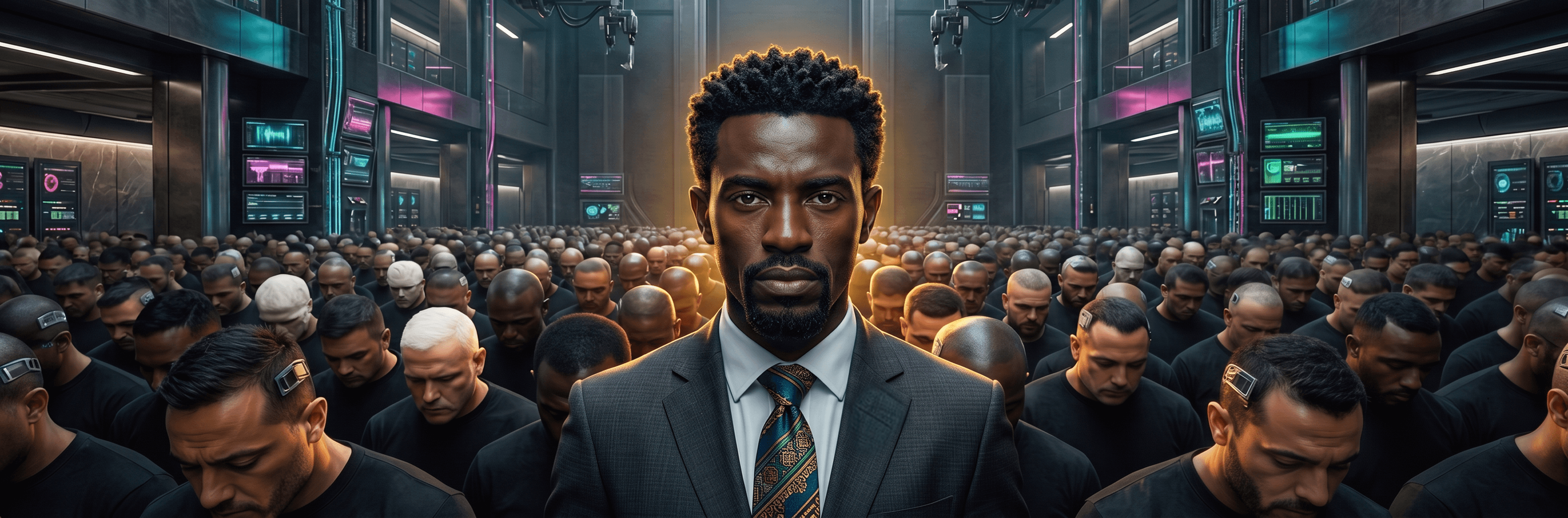
With more than eight billion people alive today, anyone paying attention might find that number alone crushing. Add the reality of living in a world where power seems concentrated in a few governments, corporations, superpowers, and financial systems, and a quiet question inevitably starts to surface and grow louder: Do I matter? If you live in Africa, or anywhere where institutions feel heavy and opportunity feels rationed, that question sharpens. When policy decides access, geography decides leverage, and history dictates the narrative, it becomes incredibly tempting to conclude that individual effort is symbolic at best and completely irrelevant at worst.
But this isn't just a philosophical debate; it shows up in our lives as hesitation, disengagement, depression, and the slow withdrawal of ambition. In fact, it is one of the most dangerous questions a capable person can answer incorrectly.
The Weight of a Noisy World
Modern life constantly reminds you of how small you are. Our news cycles revolve around wars we didn’t start, markets we don’t control, leaders we didn’t elect, and systems we simply cannot influence. Almost every screen we look at reinforces the idea that real decisions are made elsewhere, by people we’ll never meet.
Over time, this creates a quiet, subtle erosion of agency where you stop asking what you can do and start explaining why nothing can be done. The world begins to feel like something that happens to you, rather than something you actively participate in shaping, and that psychological shift is devastating.
Conspiracy as a Shortcut to Powerlessness
This sense of powerlessness is exactly where conspiracy thinking enters and why it spreads so easily. Almost every modern conspiracy shares one core outcome: making the individual feel powerless by insisting that big pharma controls everything, governments are mere puppets, markets are rigged, success is pre-decided, and nothing is truly real. While these stories feel sophisticated and masquerade as insider knowledge, their real function is simply emotional relief. They explain away why effort feels futile without requiring the discomfort of personal responsibility.
But the cost is steep: when you believe everything is secretly controlled, ambition looks naive, work feels pointless, discipline seems foolish, and cynicism entirely replaces construction. History does not reward this mindset. Every era has had its own equivalent of believing "the system is rigged," yet every era was still reshaped by individuals who acknowledged those power structures but flatly refused to let them become an excuse for inaction.
Scale Is Not the Same as Power
One of the most persistent illusions of modern life is confusing scale with inevitability. Large systems feel permanent, but they aren't; they are simply compounded over time. What looks immovable today usually started as something small, fragile, and largely ignored.
Even the institutions that now gather presidents and CEOs often began with a single person who simply refused to accept how things were done. Consider the World Economic Forum, now synonymous with global influence, it began in 1971 not as a global authority, but as a modest management forum driven by one professor and a conviction. It became a powerhouse through persistence, structure, and time because power rarely starts where it ends.
Individuals Build Systems, Not the Other Way Around
When people say that "individuals don’t matter," they fundamentally misunderstand history. Systems don’t emerge fully formed; they are built brick by brick by people who chose responsibility over resignation. Most of the people who changed industries, societies, or ideas did not begin with permission, capital, or certainty, and many even came from disadvantaged positions.
What they shared wasn't privilege, but tenacity, an almost unreasonable belief that their effort mattered even when the evidence suggested otherwise. They focused entirely on what they could control and stayed there long enough for their results to compound.
Agency Is Local Before It’s Global
Very few people change the world directly. Almost everyone who eventually does starts somewhere much smaller, changing their own output, standards, discipline, and relationship with work. They take responsibility for their craft before asking for influence, and they build credibility before demanding attention.
This is the part most people want to skip, hoping for significance before competence, recognition before results, and impact before effort. But agency always grows locally first.
The More Dangerous Question
The real risk isn’t asking the question, "Do I matter?". The real risk is answering no and reorganizing your entire life around that belief. Believing you matter pushes you toward effort, discomfort, and responsibility, while believing you don’t pushes you toward explanation, distraction, and withdrawal.
One path is significantly harder, but it is the only one that leads anywhere. You may not change the entire world, but you may change yourself, your family, a small system, or a narrow field—and that is exactly how everything meaningful begins. History does not belong only to the powerful; it belongs to those who refused to disappear. And that choice is still yours.